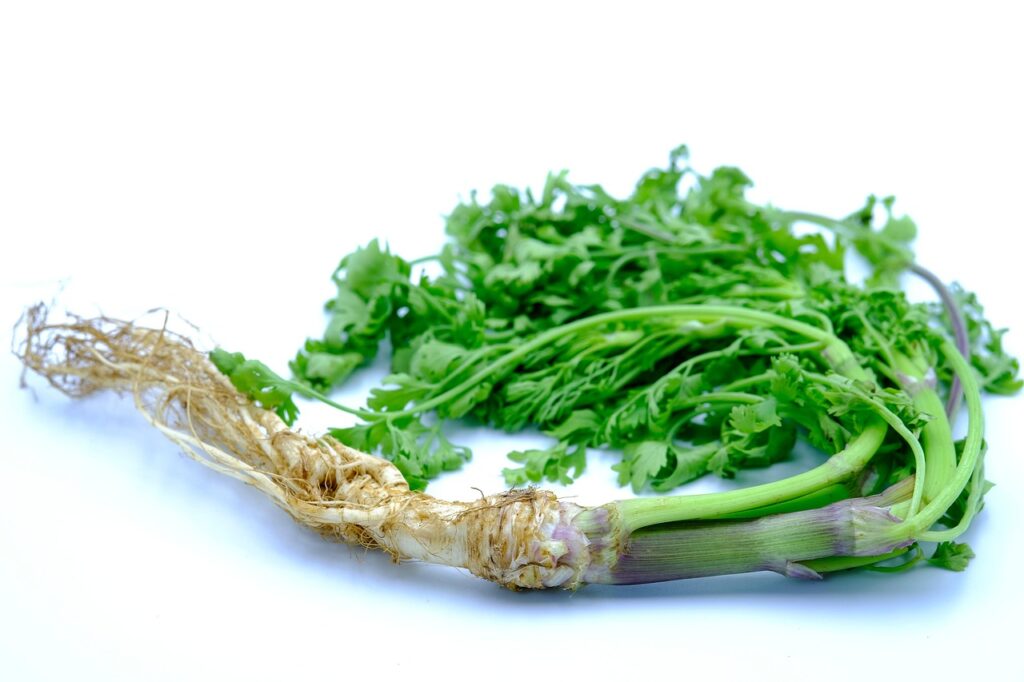
Coriander is an incredibly versatile culinary plant. Its seeds, leaves and root can all be used to impart it's unique mild flavor. It is an annual herb with divided feathery leaves commonly known as cilantro and small white flowers in umbrella-like clusters, cultivated for its aromatic leaves and seeds used as spices.
Example in a Sentence.
The commonly used spices include pepper, nutmeg, mace, cinnamon, mustard, coriander, sage, and garlic.
Hindi Name: Dhaniya
Sanskrit Name: Dhanyaka
English Name: Coriander
Latin Name: Coriandrum sativum Linn
What are the Benefits of Coriander?
Rich Source of Calcium
Benefits for cardiovascular health
Enhancing the immune system
Coriander can support controlling the levels of blood sugar
Protecting the brain health
Supporting digestive tract and gut health
Reduces Skin Inflammation
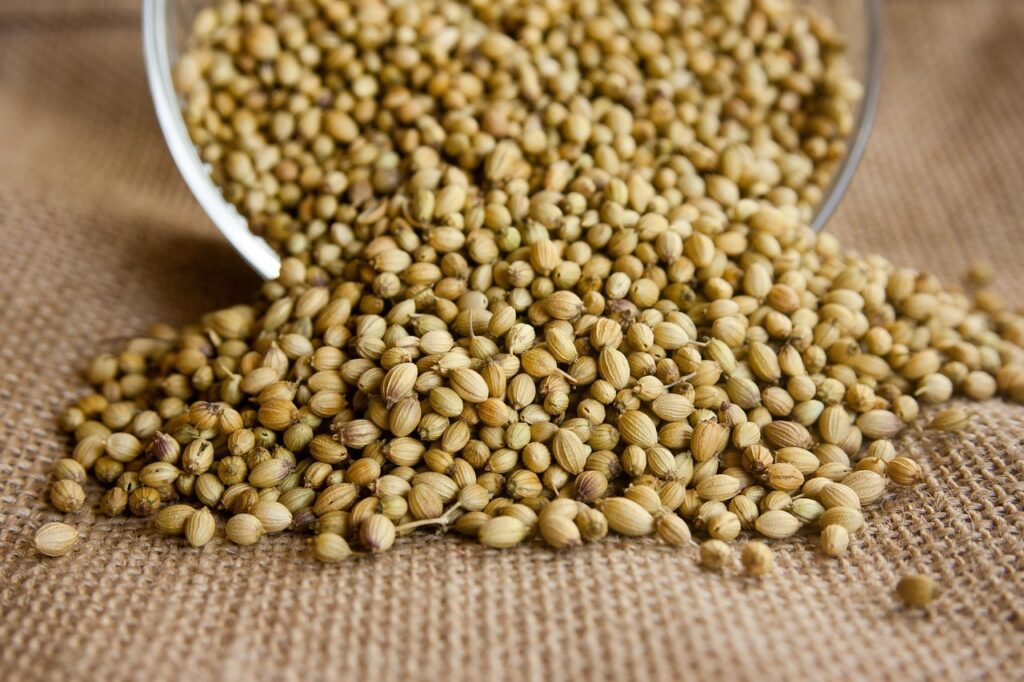
Coriander seeds are one of the kitchen spices frequently used in various Kenyan dishes. Coriander has a fairly strong aroma. It is a popular spice plant. Its small seeds are dried and traded, both ground and whole.
Coriander contains antioxidants, Vitamin C, Vitamin K, protein, calcium, phosphorus, potassium, and thiamine. Besides being a popular kitchen spice, coriander can be used for various health conditions according to the needs and appropriate dosages.